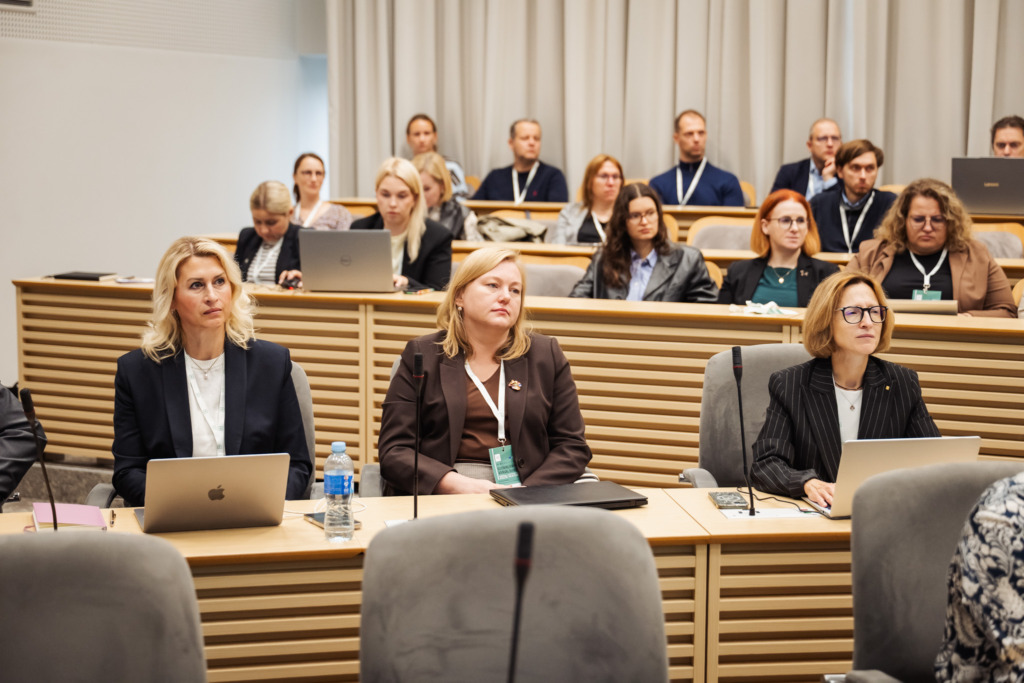
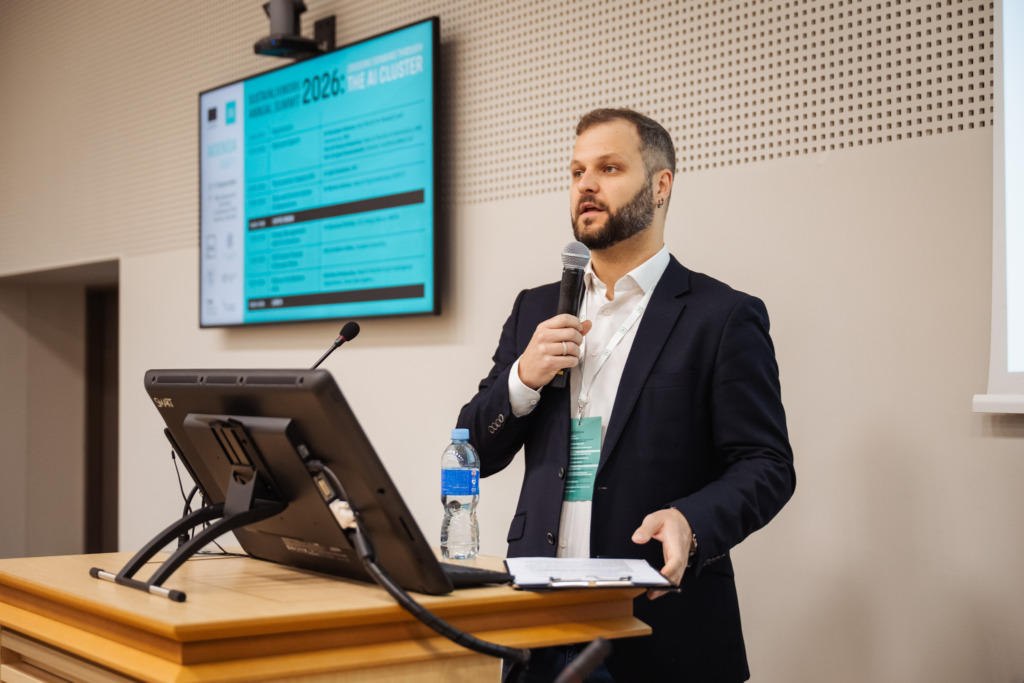
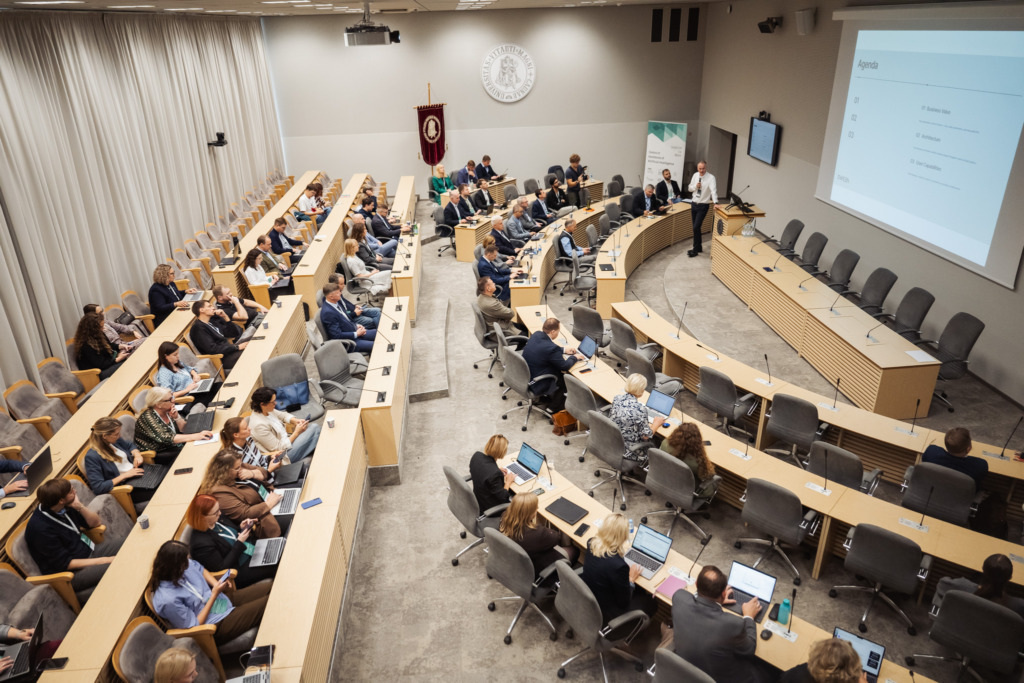
Artificial intelligence (AI) is increasingly crossing the boundaries between individual sectors, meaning that technological solutions alone are no longer enough to drive its development. Reliable data, infrastructure, expertise from different fields and collaboration are also essential. These topics were discussed on 17 September at Vytautas Magnus University (VMU) in Kaunas by participants of the SustAInLivWork Annual Summit 2026: Crossing Domains through the AI Cluster.
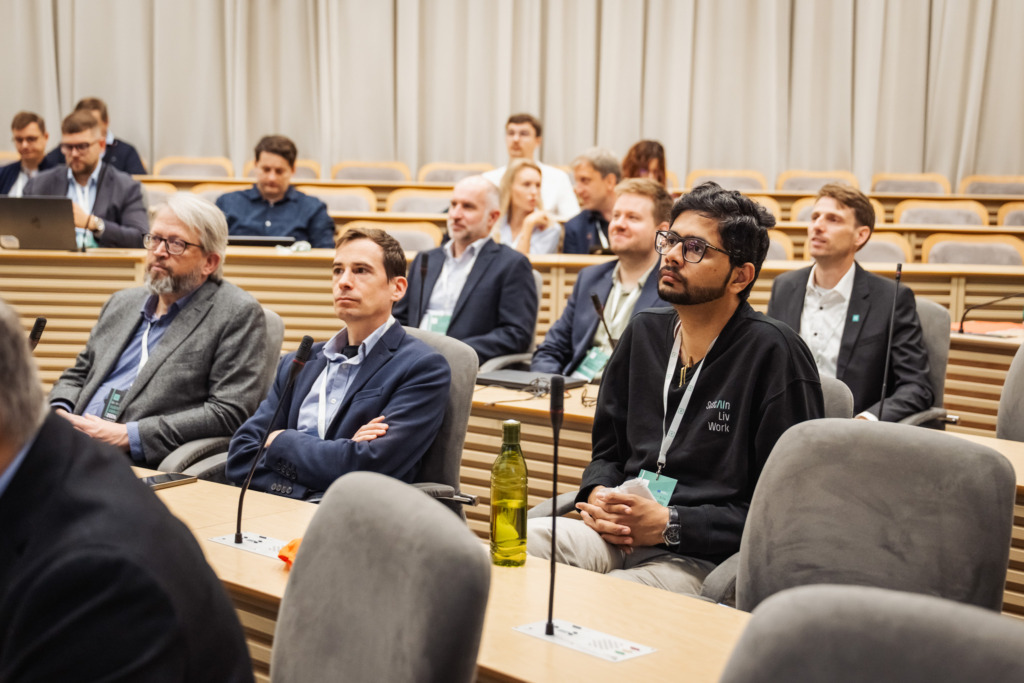
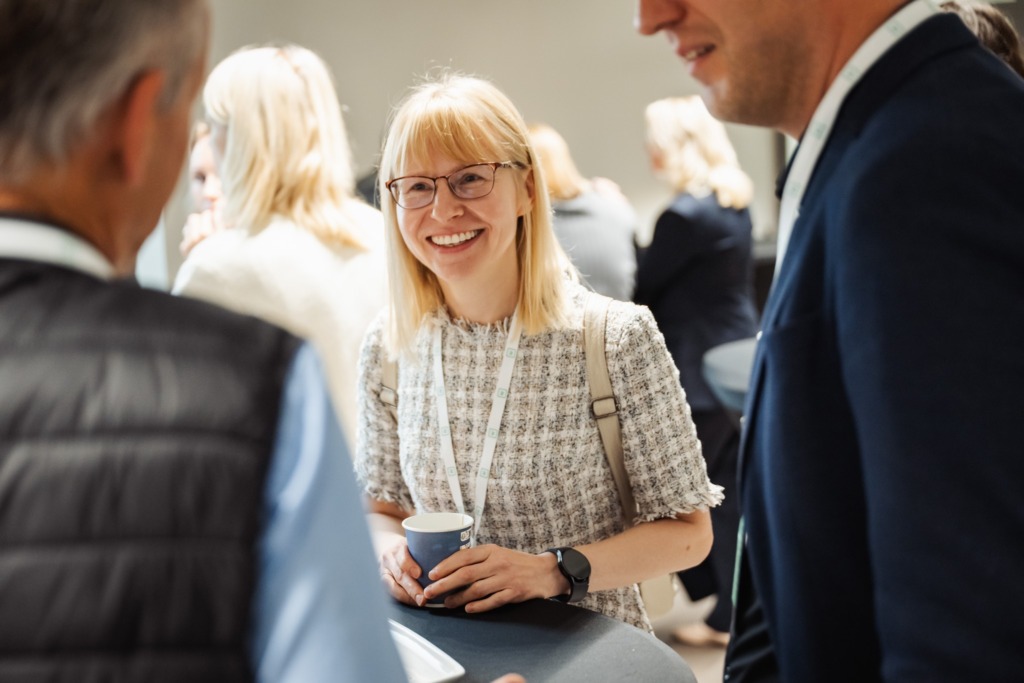
The event brought together AI experts, researchers, representatives of business and the public sector, and members of the innovation ecosystem. The programme focused on the economic impact of AI, data and service infrastructure, energy management, AI clusters and the role of data in developing AI solutions. Ethical AI, defence and opportunities for new partnerships were also discussed.
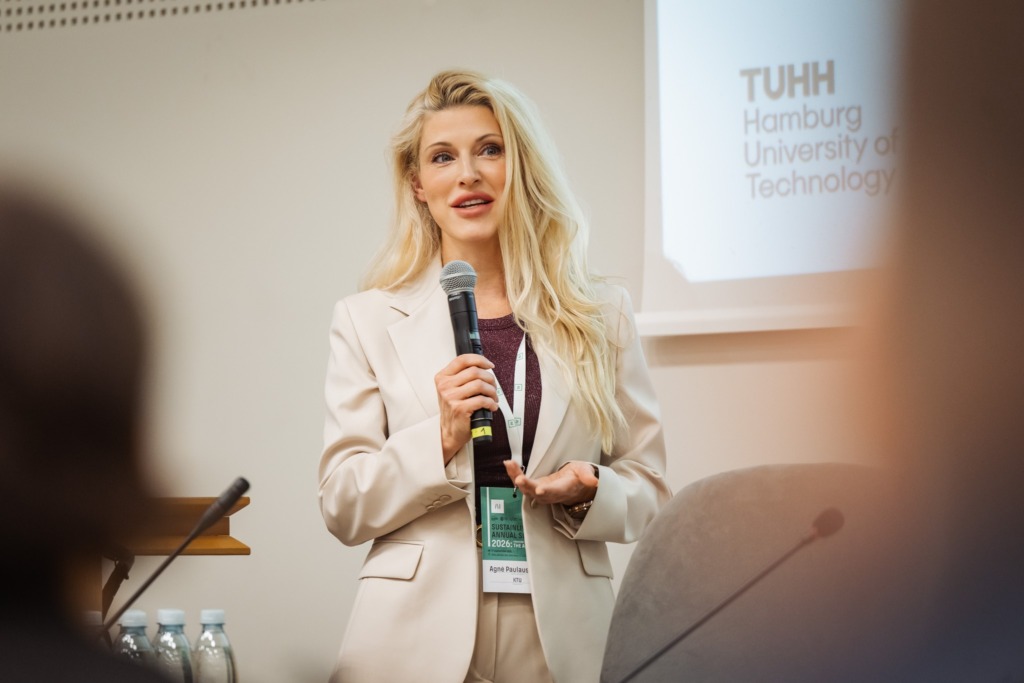
The conference was opened by Dr Rolandas Urbonas, Vice-Rector for Research and Innovation at Vytautas Magnus University, and Prof. Dr Tomas Krilavičius, Dean of the Faculty of Informatics. Prof. Dr Agnė Paulauskaitė, Director of the SustAInLivWork Centre of Excellence of Artificial Intelligence, also addressed the participants. She emphasised the importance of moving beyond individual AI solutions and strengthening connections between different fields, organisations and areas of expertise.
“When I first presented the idea of SustAInLivWork in 2021, the AI landscape looked completely different. Today, we are entering a new era of AI transformation: these technologies are becoming accessible to everyone, while the boundaries of their application continue to expand every day. This means that, as a Centre of Excellence of AI, we must adapt, follow these transformations and, even more importantly, help shape the future by creating sustainable, ethical and trustworthy AI solutions for people and society. This mission, centred on a sustainable future and sustainable living and working, is now more important than ever,” said Prof. Dr Paulauskaitė.
From the Economic Impact of AI to Practical Applications
The first part of the conference focused on the economic impact of AI and its practical applications. Dr Eglė Stonkutė from Vytautas Magnus University presented how AI is changing the economy and influencing not only technological development but also broader economic processes.
The economic perspective was complemented by concrete examples of AI applications. Dr Mantas Butkus, Head of Digi Community at FESTO Lithuania, presented AI practices in a specific data and service centre, while Dr Vytautas Šiožinys, CEO of Energy Advice and DWEEN, discussed the application of these technologies in energy management.
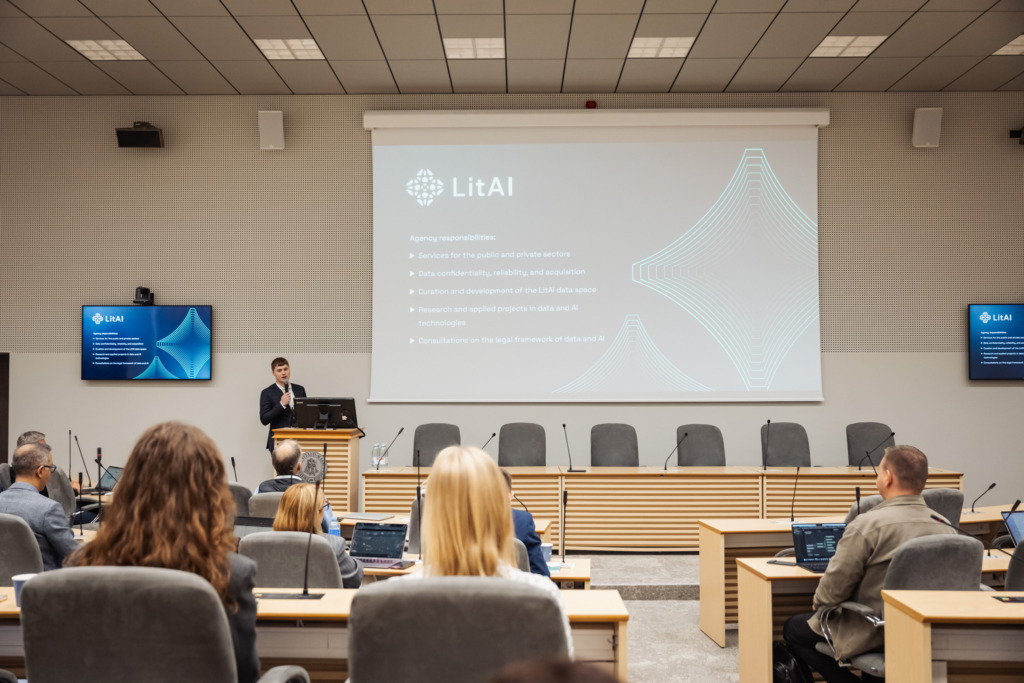
Particular attention was given to data cleaning, standardisation and the integration of data from different fields, as well as to the high-performance computing infrastructure being developed in Lithuania and practical AI applications ranging from document scanning and metadata enrichment to RAG and semantic search systems. The new Lithuanian Data Portal was also presented, designed to make data easy to find, process and prepare for further use by AI systems.
Learning from Finland’s AI Cluster Experience
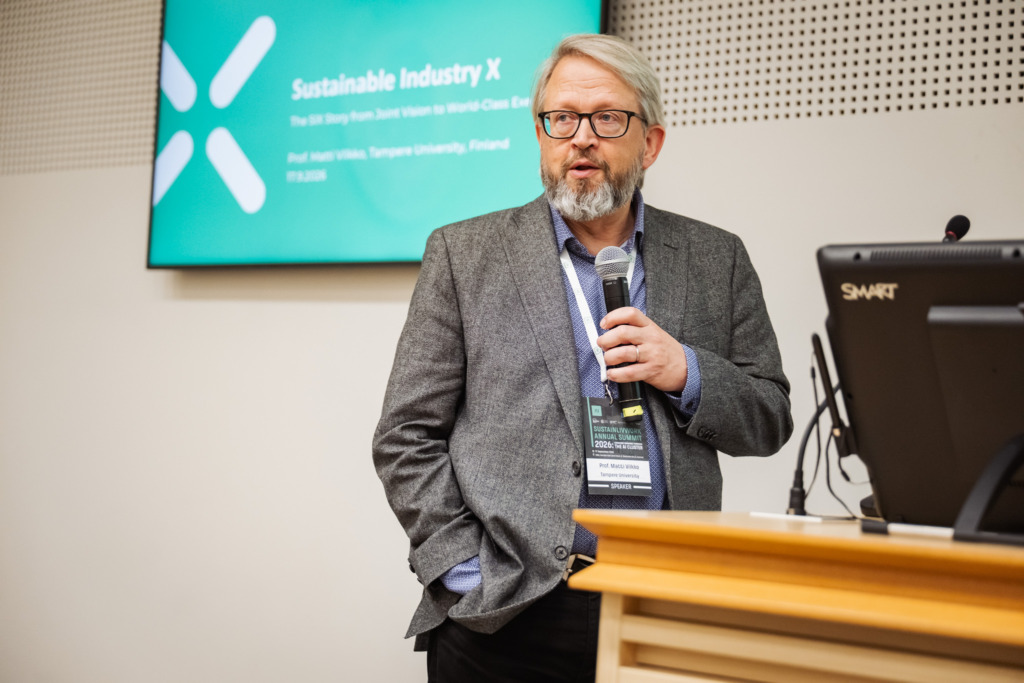
One of the main themes of this year’s conference was collaboration that extends beyond the boundaries of individual organisations or sectors. Prof. Dr Matti Vilkko from Tampere University provided an international perspective by sharing the experience of Finland’s SIX Cluster and lessons learned from developing an ecosystem connecting research and industry.
Learning from Finland’s AI Cluster Experience
One of the main themes of this year’s conference was collaboration that extends beyond the boundaries of individual organisations or sectors. Prof. Dr Matti Vilkko from Tampere University provided an international perspective by sharing the experience of Finland’s SIX Cluster and lessons learned from developing an ecosystem connecting research and industry.
This experience was continued in the Lithuanian context by Vilma Purienė, Director of the Knowledge and Technology Transfer Center at VILNIUS TECH, who presented the SustAInLivWork AI Cluster. Its aim is to bring together organisations working with AI and expertise from different fields within a shared network, creating more opportunities for collaboration between science, business, public institutions and other members of the ecosystem. This model makes it possible to look beyond individual projects or organisations: by combining different areas of expertise, AI solutions can not only be developed but also tested, adapted and deployed more rapidly across different sectors.
Developing AI Responsibly Across Sectors
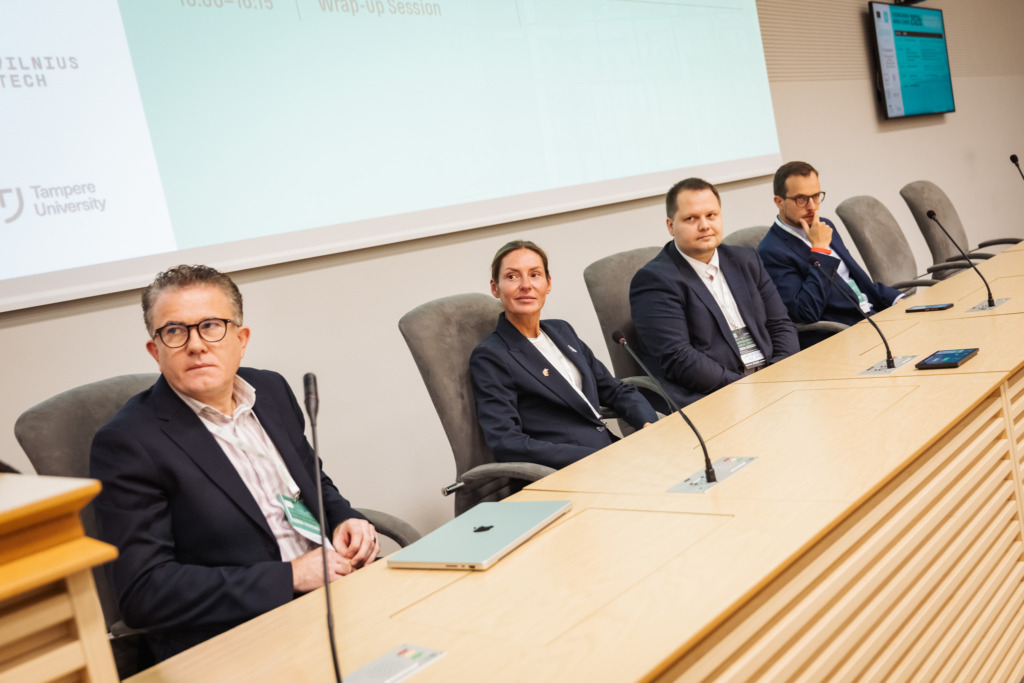
As the use of AI expands across different fields, increasing attention is being paid to the responsible development and deployment of these technologies. The conference addressed this topic during the discussion How Can Clusters and Associations Help Develop Ethical AI Uses?
The panel brought together Dr Virgilijus Dirma, Deputy Director of Infobalt; Linas Petkevičius, President of the Artificial Intelligence Association of Lithuania; Tadas Stankevičius, Director of Kaunas IN; and Simona Šimulytė, Executive Director of LithuaniaBIO and Associate Professor of Partnership at the Faculty of Economics and Management, Vytautas Magnus University. Representing different areas of the innovation ecosystem, the panellists discussed the role of clusters and associations in promoting the responsible use of AI and how collaboration between representatives of different fields can help address ethical issues related to AI development.
“One of our advantages is trust. If a Lithuanian company can demonstrate that its AI solution is secure and meets the relevant requirements, this can become a competitive advantage, especially in sensitive areas such as healthcare and the public sector. Europe cannot compete with the largest market players in terms of capital, but we can compete by developing AI solutions that businesses and the public sector can trust,” said Dr Virgilijus Dirma, Deputy Director of Infobalt.
AI in Defence and New Partnerships
The conference also focused on the role of AI in defence and security. Darius Antanaitis, a Lithuanian Armed Forces reserve officer, entrepreneur, investor and defence and security technology expert, examined the AI solutions required by modern armed forces and the opportunities for their application in a rapidly changing security environment in his presentation Military Needs of AI.
The Brokerage Event reinforced the message echoed throughout the conference: the development of AI depends not only on technology, data and infrastructure, but also on the ability to bring together people and organisations from different fields. The SustAInLivWork Annual Summit 2026 created a space for exactly that, from discussions on AI in the economy, energy and ethics to new connections that could become the starting point for joint projects and solutions.
The SustAInLivWork project is co-funded under the European Union’s Horizon Europe programme under Grant Agreement No. 101059903 and under the European Union Funds’ Investments 2021–2027 (project No. 10-042-P-0001).