Skip to content
Dark red background with a white open book and pencil icon, alongside the text “4 Quality Education.” Represents the goal of inclusive, equitable, and quality education for all.
Mustard background with a white infinity loop featuring a curved arrow, and the text “12 Responsible Consumption and Production.” Symbolizes sustainable consumption and production patterns.
Navy background with five interlinked white circles forming a flower-like shape, and the text “17 Partnerships for the Goals.” Illustrates the goal of strengthening global partnerships to support sustainable development.

GenAISA workshop offers a practical look at the potential of generative artificial intelligence

Important | 2026-06-06

Generative artificial intelligence is rapidly transforming learning, work and creative processes. As a result, it is becoming increasingly important not only to observe the latest technological trends, but also to test new solutions in practice. This was the aim of the workshop organised as part of the Erasmus+ project GenAISA (Generative AI Skills Academy), during which participants explored the potential applications of generative artificial intelligence in the fields of natural language processing, image generation and video generation.

Prof. Dr Agnė Paulauskaitė, Head of the KTU Artificial Intelligence Centre of Excellence, emphasises that practical work with generative artificial intelligence tools is an important step in developing competences that are needed today across a wide range of fields.

“Generative artificial intelligence is changing the way we learn, create and solve everyday professional tasks. It is therefore very important to give people the opportunity to try out these technologies in practice: to understand how they work, where they can be applied and what limitations they have. Such workshops help to build confidence in technologies, critical thinking and a responsible approach to the application of AI,” says Prof. Dr Agnė Paulauskaitė.

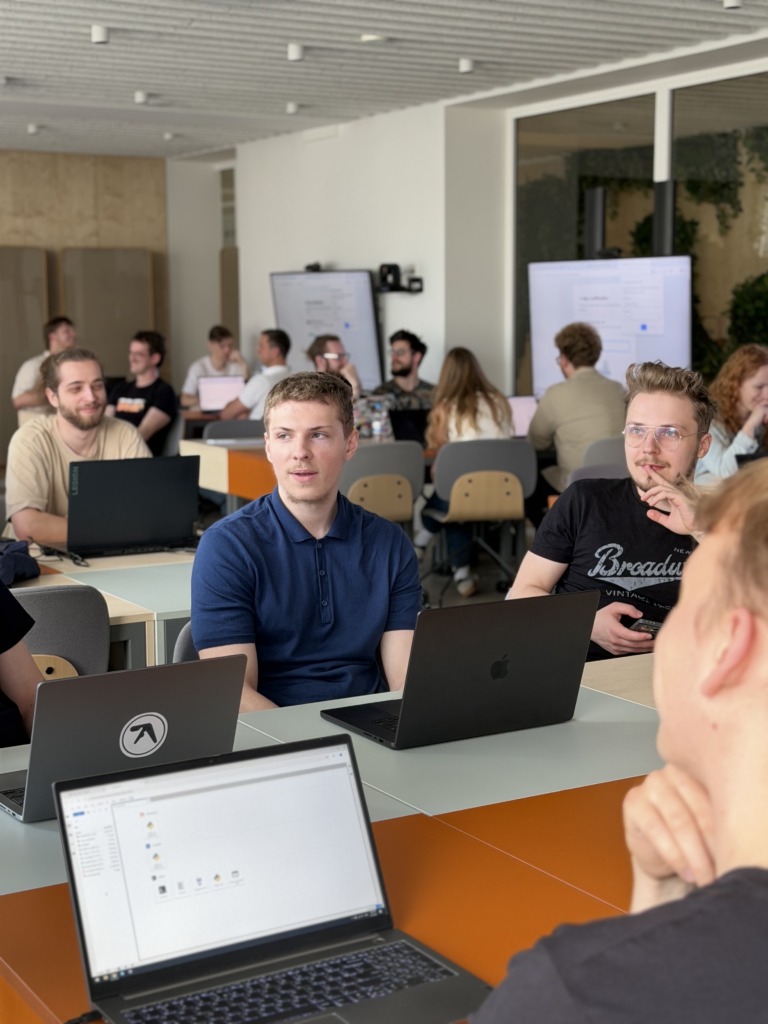
During the workshop, participants worked in groups, analysed learning materials, completed practical tasks and tested the examples provided.

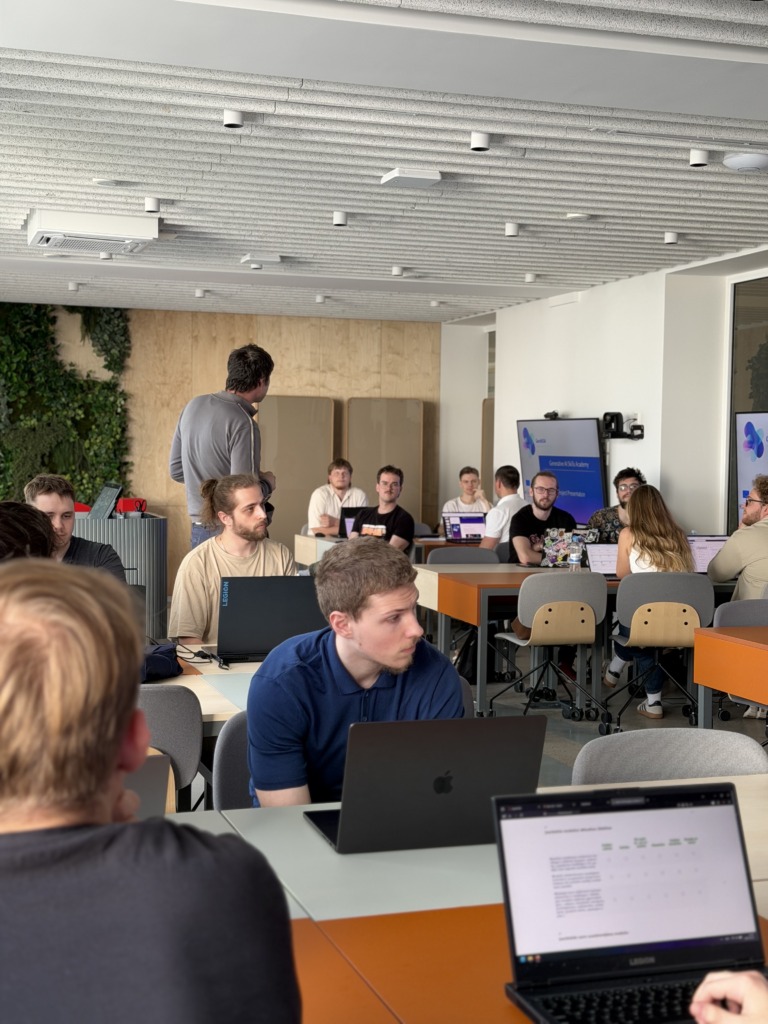
Students sit around a laptop during a GenAISA workshop on generative AI skills in education.
The Generative AI Skills Academy workshop

This format enabled them to explore the theoretical aspects of generative artificial intelligence in greater depth and to assess how different solutions related to text, image and video content generation work.

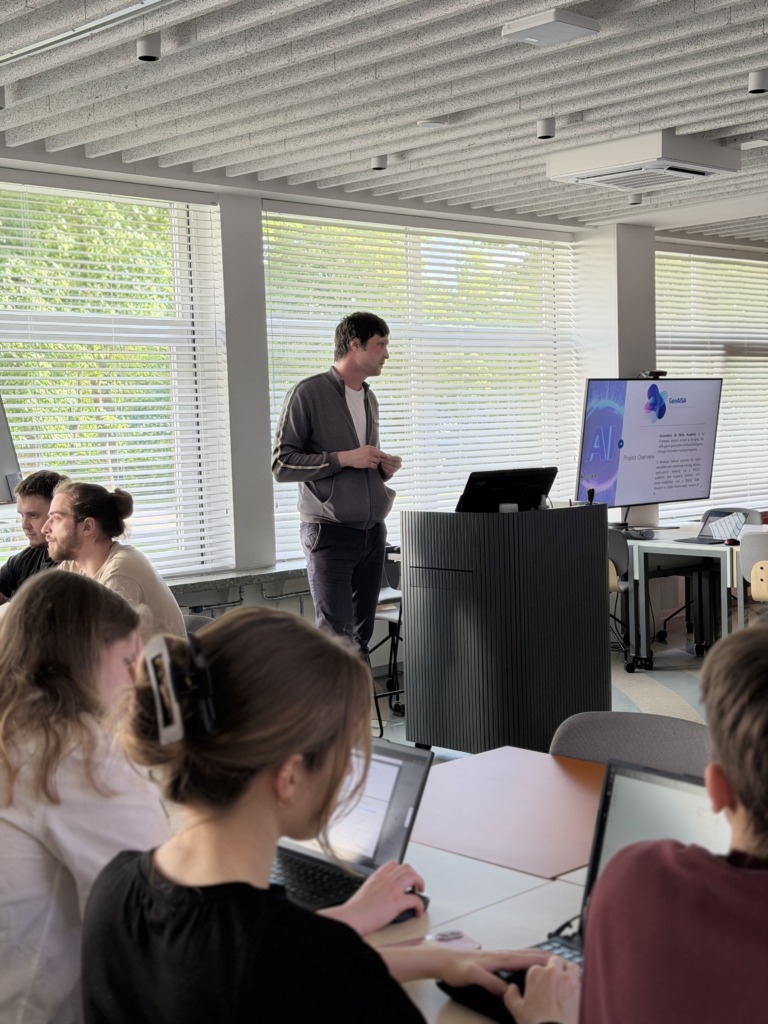
A presenter leads a classroom session while students work on laptops during the GenAISA Generative AI Skills Academy workshop. A large screen displays a project overview slide about generative AI skills in education.
The Generative AI Skills Academy workshop

After the workshop, participants highlighted that the learning material presented was relevant, engaging and in line with current trends in artificial intelligence technologies. The practical tasks, interactive learning format, group work and opportunity to discuss scenarios for applying generative artificial intelligence in different fields were particularly well received.

Participants also noted that the module provided an opportunity to deepen their knowledge of natural language processing technologies, image generation models and video generation solutions. The practical activities helped them better understand which tools can be used for creative, educational or professional purposes, as well as what skills are needed to apply them responsibly and effectively.

According to Prof. Dr A. Paulauskaitė, the application of generative artificial intelligence technologies requires not only technical knowledge, but also a critical approach to generated content.

“Generative artificial intelligence opens up many new opportunities, but at the same time reminds us that the human role remains essential. Technology can propose solutions, but it is the human who formulates the task, evaluates the outcome, makes the final decision and takes responsibility for how artificial intelligence is applied. Therefore, developing artificial intelligence competences is becoming one of the most important prerequisites for creating advanced, ethical solutions that deliver long-term value,” says the head of the centre.

Practical challenges were also discussed during the sessions. One of them was the substantial computing resources required for more complex video generation models. Participants pointed out that the application of generative artificial intelligence requires not only creativity and technological knowledge, but also appropriate infrastructure, critical evaluation and a responsible approach to the content being created.

The GenAISA project is co-funded by the European Union under the Erasmus+ programme, project No. 101179990.