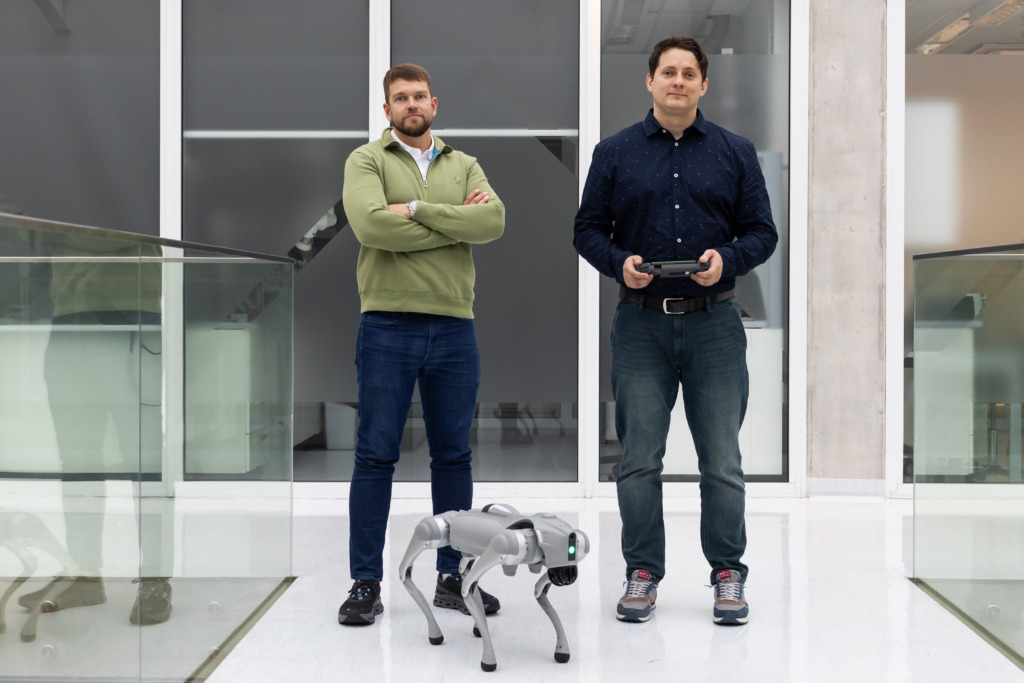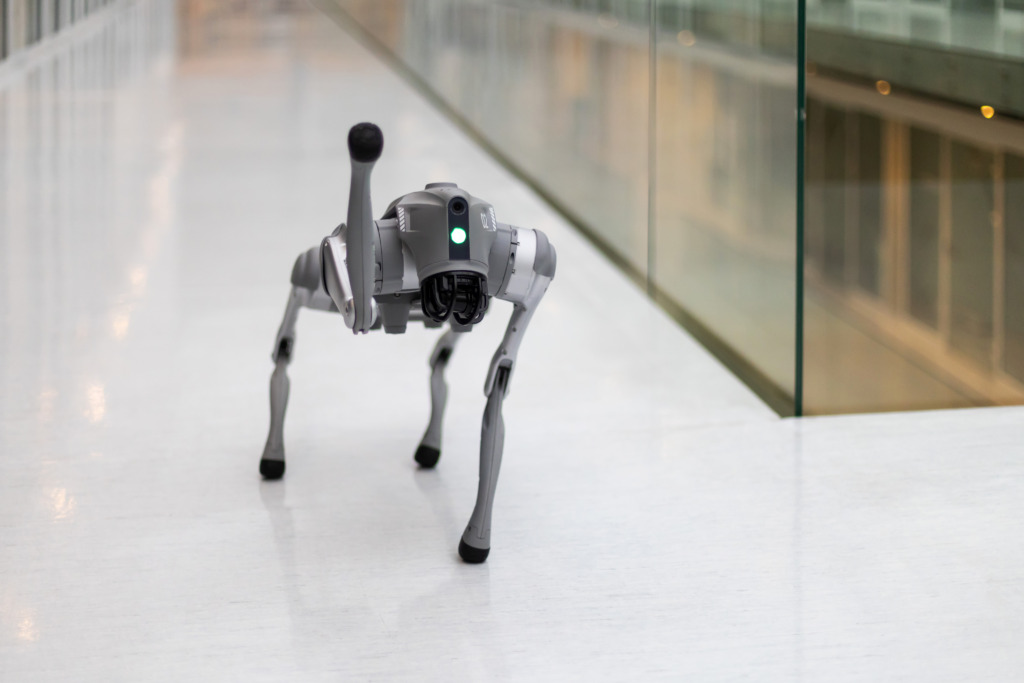




The research infrastructure of the SustAInLivWork AI Centre of Excellence, coordinated by KTU, has been expanded with a Unitree Go2 quadruped robot. The advanced robotics platform will enable researchers to develop artificial intelligence (AI), autonomous systems and robotics solutions and test them in real-world environments.
Quadruped robots can operate in environments where traditional wheeled platforms face difficulties, navigating uneven surfaces, slopes and obstacles while adapting to changing surroundings. These capabilities mean that such systems can be used not only for scientific experiments but also for practical tasks, such as inspecting manufacturing, energy or transport infrastructure and monitoring the environment or animals.
The Unitree Go2 observes its surroundings using LiDAR and visible-light cameras. The laser sensor enables it to determine the position of surrounding objects and their distance from the robot, detect obstacles and navigate its environment. According to Dr Rytis Augustauskas, Head of the AI Research Hub at SustAInLivWork, the ability to programme the robot is particularly important for researchers.