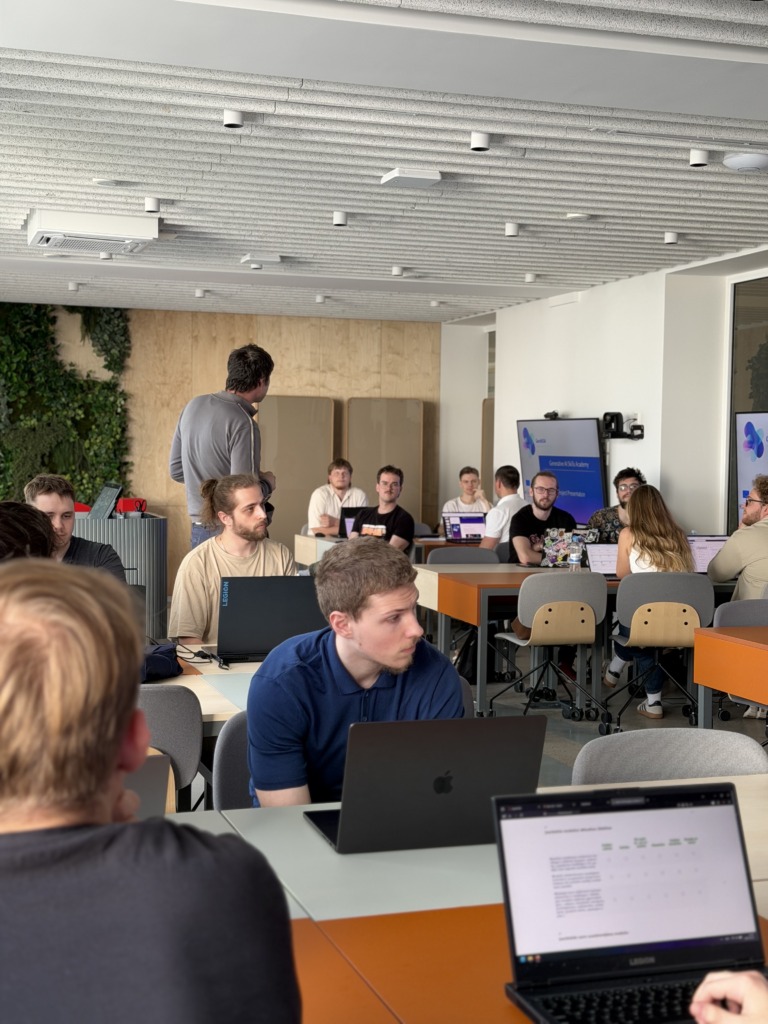
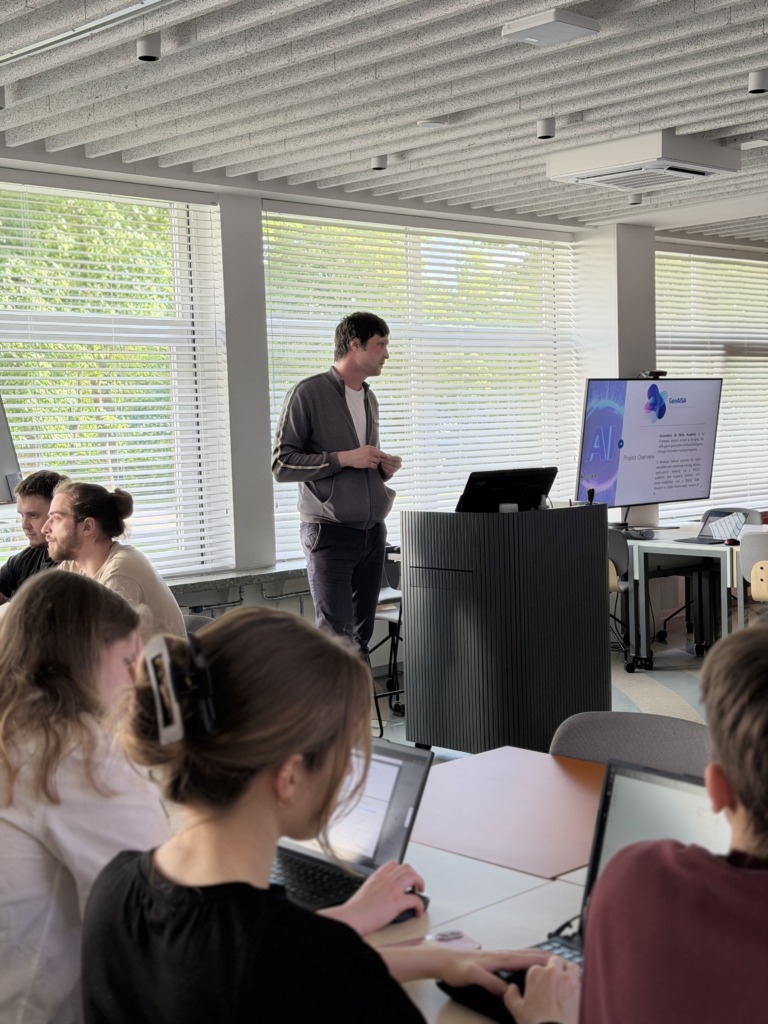
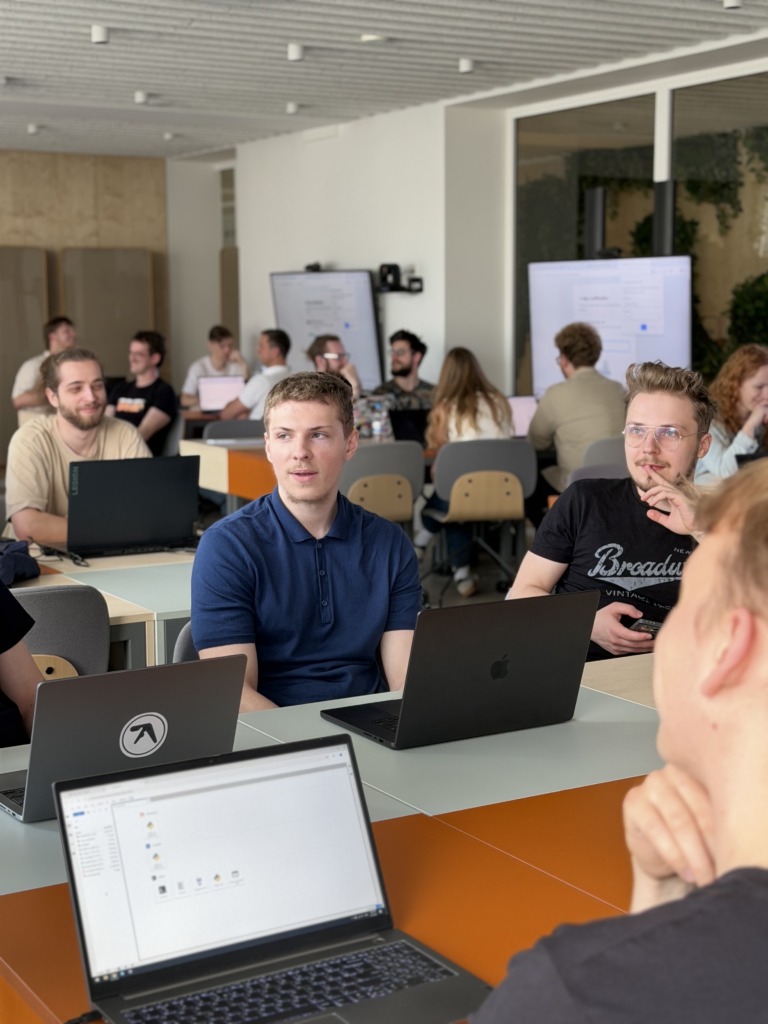
Generative artificial intelligence is rapidly transforming learning, work and creative processes. As a result, it is becoming increasingly important not only to observe the latest technological trends, but also to test new solutions in practice. This was the aim of the workshop organised as part of the Erasmus+ project GenAISA (Generative AI Skills Academy), during which participants explored the potential applications of generative artificial intelligence in the fields of natural language processing, image generation and video generation.
According to Prof. Dr A. Paulauskaitė, the application of generative artificial intelligence technologies requires not only technical knowledge, but also a critical approach to generated content.
“Generative artificial intelligence opens up many new opportunities, but at the same time reminds us that the human role remains essential. Technology can propose solutions, but it is the human who formulates the task, evaluates the outcome, makes the final decision and takes responsibility for how artificial intelligence is applied. Therefore, developing artificial intelligence competences is becoming one of the most important prerequisites for creating advanced, ethical solutions that deliver long-term value,” says the head of the centre.
Practical challenges were also discussed during the sessions. One of them was the substantial computing resources required for more complex video generation models. Participants pointed out that the application of generative artificial intelligence requires not only creativity and technological knowledge, but also appropriate infrastructure, critical evaluation and a responsible approach to the content being created.
The GenAISA project is co-funded by the European Union under the Erasmus+ programme, project No. 101179990.